Aigiri Nandini: The Hymn of the Goddess Who Slays Demons
Learn Aigiri Nandini (Mahishasura Mardini Stotram)—the powerful hymn praising the Goddess who destroyed the buffalo demon. Complete with meaning and practice guide.
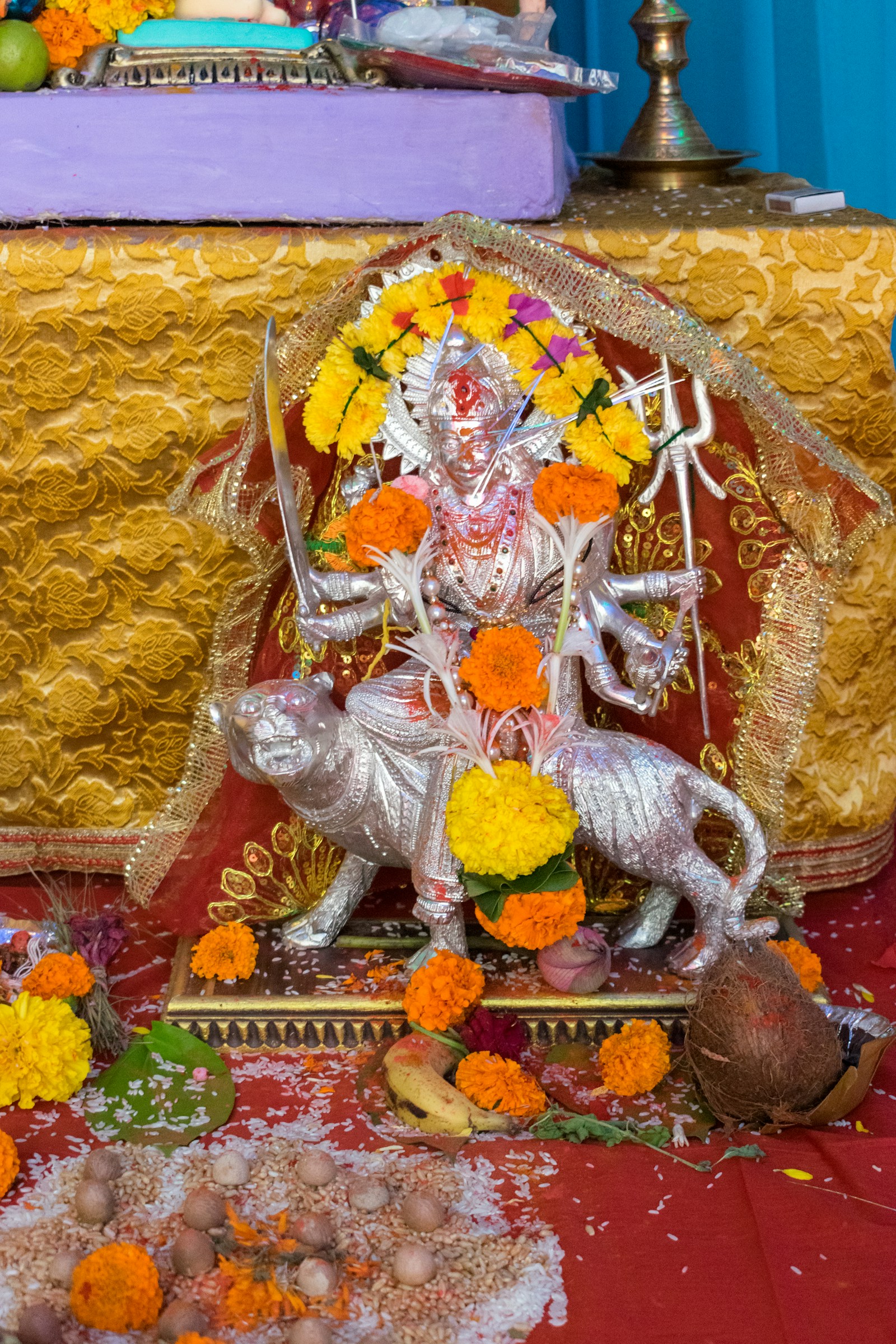
Aigiri Nandini: The Hymn of the Goddess Who Slays Demons
The Mahishasura Mardini Stotram, known by its famous refrain "Aigiri Nandini," is one of the most powerful and beloved hymns to the Divine Mother. Its rhythmic intensity and vivid imagery make it unforgettable.
The Famous Refrain
In Devanagari:
अयि गिरिनन्दिनि नन्दितमेदिनि विश्वविनोदिनि नन्दनुते
गिरिवरविन्ध्यशिरोऽधिनिवासिनि विष्णुविलासिनि जिष्णुनुते।
भगवति हे शितिकण्ठकुटुम्बिनि भूरिकुटुम्बिनि भूरिकृते
जय जय हे महिषासुरमर्दिनि रम्यकपर्दिनि शैलसुते॥
Transliteration:
Ayi girinandini nanditamedini viśvavinodini nandanute
Girivara vindhyaśiro'dhinivāsini viṣṇuvilāsini jiṣṇunute
Bhagavati he śitikaṇṭhakuṭumbini bhūrikuṭumbini bhūrikṛte
Jaya jaya he mahiṣāsuramardini ramyakapardini śailasute
Practice This Mantra
Listen to the pronunciation and start learning
Understanding the Title
Mahishasura Mardini
"She who destroys the buffalo demon"
Aigiri Nandini
"O Daughter of the Mountain"
The Goddess is addressed as the daughter of Himavan, the mountain king—referring to her form as Parvati.
The Story Behind the Hymn
The Myth
The demon Mahishasura obtained a boon that he could not be killed by any god or man. Drunk with power, he conquered heaven and earth.
The gods, desperate, combined their energies to create a Goddess—Durga. She rode into battle on a lion, wielding weapons given by each god, and after a fierce fight, slew Mahishasura.
The Symbolic Meaning
The buffalo represents:
The Goddess represents:
Authorship
The stotra is attributed to Adi Shankaracharya (8th century CE), though some scholars debate this. Regardless of authorship, it has been chanted for centuries with devotion.
Structure of the Hymn
The stotra consists of 21 verses, each ending with the refrain:
जय जय हे महिषासुरमर्दिनि रम्यकपर्दिनि शैलसुते
"Victory, victory to you, O slayer of Mahishasura, with beautiful braids, O daughter of the mountain"
The Pattern
Each verse:
Pronunciation Features
The Rhythm
Like Shiva Tandava, this stotra has a driving, hypnotic rhythm. The repeated sound patterns create a trance-like effect.
Complex Compounds
Breaking down the refrain:
Key Sounds
Śailasute (शैलसुते):
Mahiṣāsuramardini (महिषासुरमर्दिनि):
Practice Approach
Learning Strategy
Given the length and complexity:
Recommended Progression
When to Chant
Navratri
The nine nights of Navratri are the most powerful time:
Fridays
Shakti's day—regular Friday practice builds connection.
During Challenges
When facing:
Full Moon
The divine feminine is associated with lunar energy. Full moon nights enhance Shakti practices.
The Experience of Chanting
What Practitioners Report
The Building Intensity
The stotra naturally builds in intensity:
Famous Renditions
Several recordings have made this stotra widely known:
Traditional Style
Modern Renditions
Points to Listen For
The Deeper Teaching
Beyond the dramatic imagery, the stotra teaches:
1. The Divine Feminine as Power
Shakti isn't passive—she actively destroys evil and protects good.
2. Evil Can Be Overcome
No matter how powerful the demon, consciousness defeats unconsciousness.
3. Divine Help is Available
When we invoke sincerely, grace responds.
4. Victory Through Devotion
The refrain "Jaya Jaya" is both praise and affirmation of inevitable victory.
Modern Relevance
The hymn speaks to contemporary struggles:
Practical Tips
For Beginners
For Regular Practice
For Deep Practice
Practice Aigiri Nandini with AI pronunciation feedback at Vedic Voice.