Hindu Cosmology: The Universe is 155 Trillion Years Old (And It Makes Scientific Sense)
From the Big Bang to cosmic cycles—how ancient Hindu cosmology describes a universe far older and vaster than Western science imagined until recently.
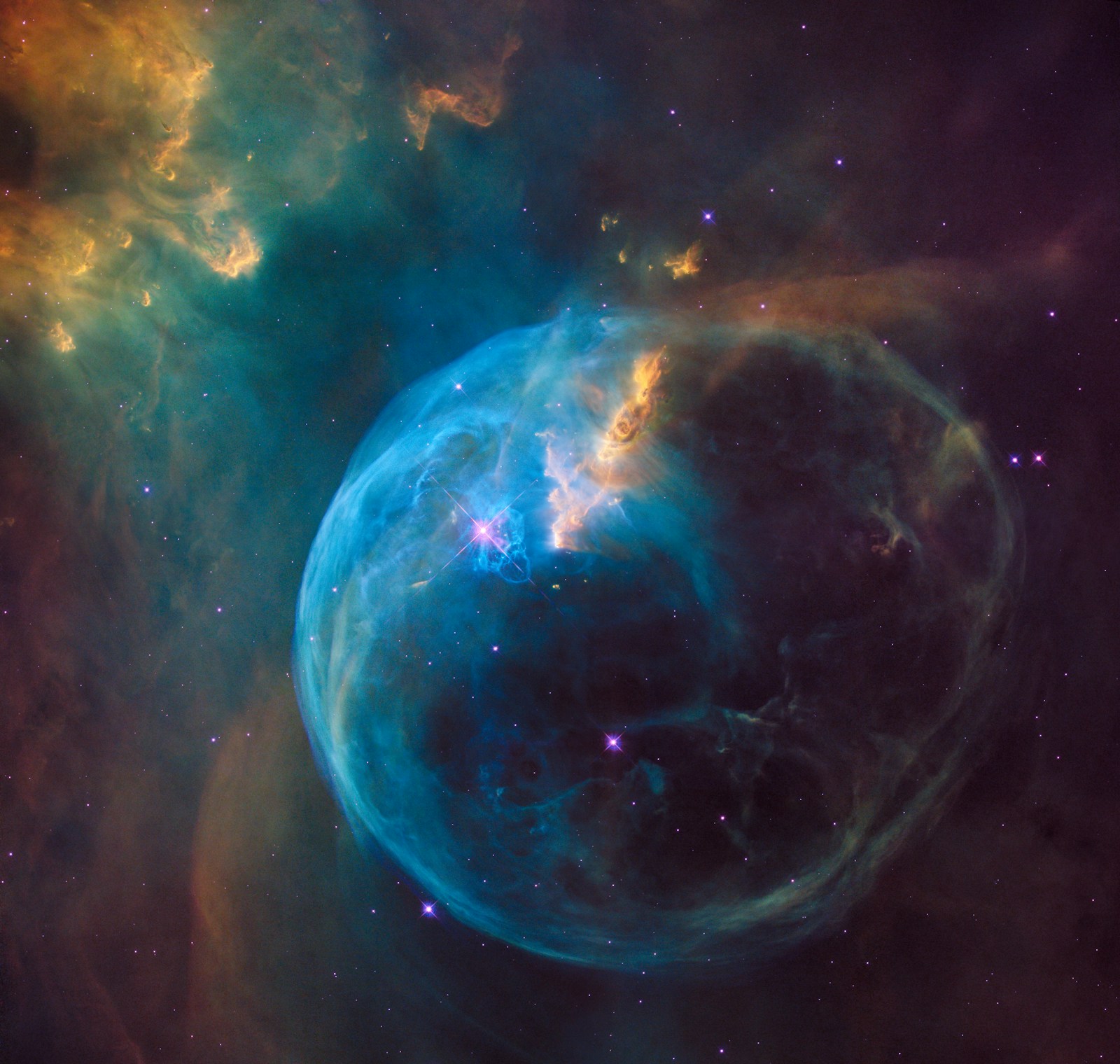
Hindu Cosmology: The Universe is 155 Trillion Years Old
When Western scientists in the early 20th century realized the universe had a beginning, it was revolutionary. The "Big Bang" overturned millennia of static universe assumptions.
But Hindu cosmology had been saying something far more radical for 3,000+ years: The universe is born, lives, dies, and is reborn—in cycles spanning trillions of years.
And the numbers they calculated? They're eerily close to what modern physics suggests.
The Numbers That Shocked Scientists
Carl Sagan, in his TV series Cosmos, expressed amazement:
"The Hindu religion is the only one of the world's great faiths dedicated to the idea that the Cosmos itself undergoes an immense, indeed an infinite, number of deaths and rebirths. It is the only religion in which time scales correspond to those of modern scientific cosmology."
— Carl Sagan
The Basic Framework
Hindu cosmology operates on nested time cycles:
Human Time → Divine Time
The Yuga Cycle
The smallest cosmic cycle is the Mahayuga (Great Age), consisting of four Yugas:
Total Mahayuga = 4,320,000 years
According to tradition, we are currently in Kali Yuga, which began in 3102 BCE (around when Krishna died).
The Manvantara
Above the Mahayuga is the Manvantara:
We are currently in the 7th Manvantara of 14 total, under Manu Vaivasvata.
The Day and Night of Brahma
The math:
During Brahma's "day," the universe exists. During his "night," it dissolves into potential (Pralaya). This night is another 4.32 billion years.
One full day-night cycle = 8.64 billion years
Brahma's Year and Lifespan
After Brahma dies, there's a Maha Pralaya (Great Dissolution) of equal duration. Then a new Brahma is born, and the cycle repeats.
Where Are We Now?
According to tradition:
The Scientific Parallels
Big Bang and Cyclic Models
Modern physics has two competing models:
Hindu cosmology aligns with the cyclic model—which is gaining scientific support:
The 4.32 Billion Year Number
The duration of Brahma's day (4.32 billion years) is remarkably close to:
Whether this is coincidence or ancient observation remains debated.
The Multiverse Connection
Hindu cosmology describes infinite Brahmas, each creating their own universe:
"What is one Brahma's lifetime is but an instant in the view of Vishnu."
This mirrors modern multiverse theories:
Creation: The Cosmic Egg
How does creation occur? Through the Hiranyagarbha (Golden Womb/Cosmic Egg):
The Nasadiya Sukta (Creation Hymn) describes:
This is strikingly similar to quantum physics descriptions:
The Three Gunas: Cosmic Principles
Creation manifests through three fundamental qualities:
Everything in the universe—from galaxies to thoughts—is a combination of these three gunas in different proportions.
This maps onto physics:
Time as Circular, Not Linear
"The wheel of time turns, and ages come and pass, leaving memories that become legend. Legend fades to myth, and even myth is long forgotten when the Age that gave it birth comes again."
— Adapted from Hindu concept of Kalachakra
Western thought traditionally saw time as a line:
Hindu cosmology sees time as a wheel (Kalachakra):
Modern physics increasingly supports this:
Consciousness in Cosmology
Unlike Western cosmology, consciousness is fundamental in Hindu cosmology:
This parallels emerging theories:
The Practical Teaching
Beyond the cosmic scale, this cosmology teaches:
Perspective
Your problems exist in Kali Yuga, which is 432,000 years long, which is 1/1000th of Brahma's day, which is 1/100th of his lifetime, which is 1/2 of a Maha Kalpa, which is just one of infinite cycles.
You are both infinitesimally small AND intimately connected to the whole.
Non-Attachment
Everything—including the universe itself—arises and passes away. Clinging to anything impermanent causes suffering.
Purpose
Despite cosmic impermanence, dharma (righteous action) matters. Each being has a role in the cosmic dance.
Key Numbers Summary
🎯 Key Takeaways
- Kali Yuga (current age): 432,000 years (started 3102 BCE)
- Mahayuga (4 yugas): 4,320,000 years
- Manvantara (71 mahayugas): 306.72 million years
- Kalpa (Brahma's day): 4.32 billion years
- Brahma's lifespan: 311.04 trillion years
- We're in Brahma's 51st year, making the universe ~155 trillion years old
- After this Brahma, a new cycle begins—there's no ultimate beginning or end
- Modern cyclic cosmology theories align with this ancient framework
The Mantras of Cosmic Time
The Gayatri Mantra invokes the cosmic sun (Savitr) as the source of enlightenment:
ॐ भूर्भुवः स्वः
तत्सवितुर्वरेण्यं
भर्गो देवस्य धीमहि
धियो यो नः प्रचोदयात्
"We meditate on the divine light of the Sun. May it illuminate our minds."
Learn to chant this and other cosmic mantras correctly with Vedic Voice's AI pronunciation guide—connecting your voice to the same sounds that have contemplated the infinite for millennia.