Kashi Decoded: 7 Mind-Blowing Secrets of the World's Oldest Living City
Discover why Varanasi has been continuously inhabited for 5,000 years. From the cosmic geography of 84 ghats to the science behind cremation at Manikarnika.
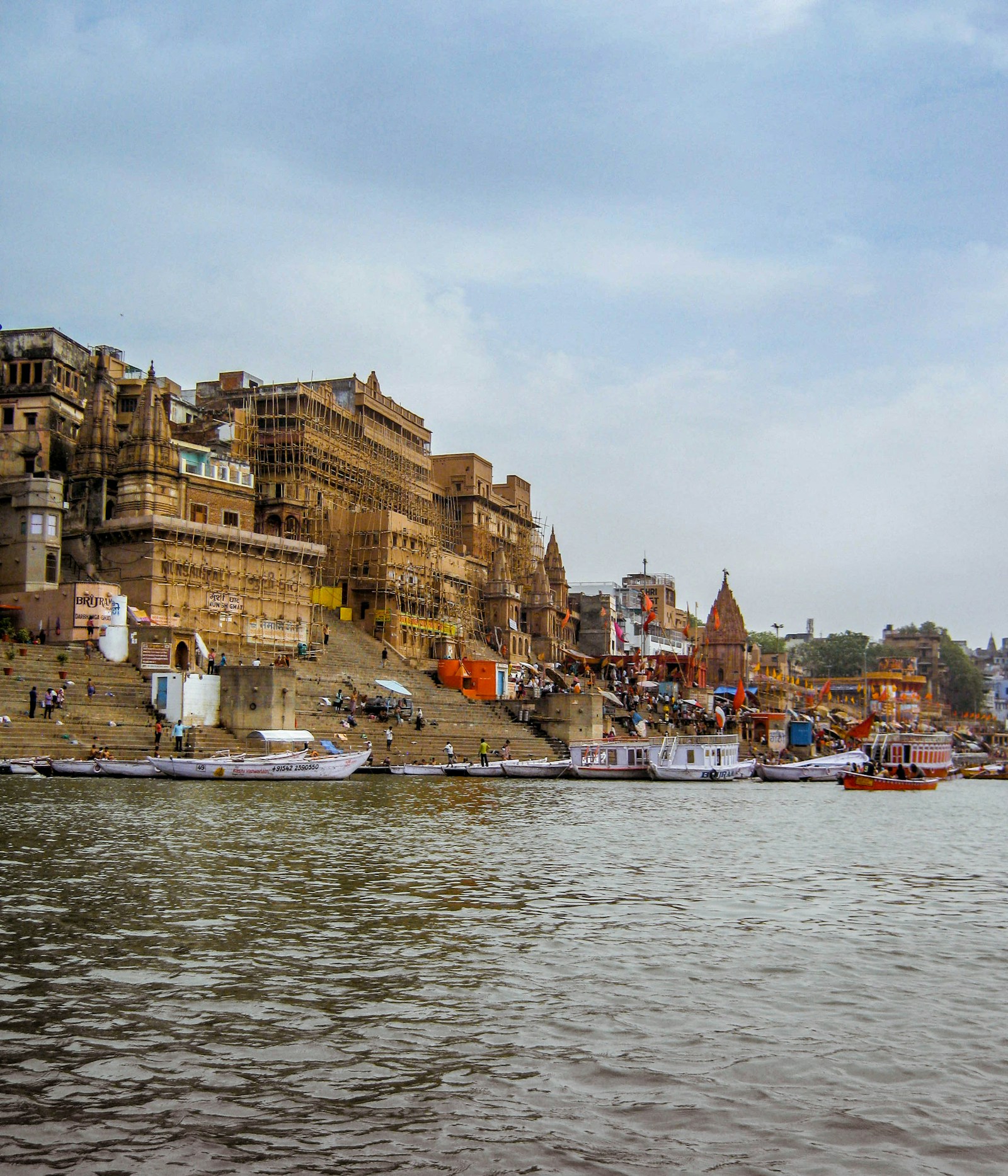
Kashi Decoded: 7 Mind-Blowing Secrets of the World's Oldest Living City
Mark Twain wrote: "Benares is older than history, older than tradition, older even than legend, and looks twice as old as all of them put together."
He wasn't exaggerating. While Rome was still a village and Athens was just getting started, Kashi was already ancient. Archaeological evidence suggests continuous habitation for over 5,000 years—making Varanasi (Kashi, Banaras) the oldest continuously inhabited city on Earth.
But what makes this city so special that millions still come here to live, die, and seek liberation?
Let's decode the secrets.
Secret #1: The City is a Cosmic Diagram
The city is bounded by the Panchakroshi circuit—a 50-mile pilgrimage route that defines its sacred boundary. Within this:
The entire layout mirrors the human body in tantric tradition:
Walking through Kashi is literally walking through a sacred body.
Secret #2: Why Death Here Grants Liberation
"Kashyam maranam muktih"—Death in Kashi is liberation.
— Ancient saying
This isn't superstition. The belief has sophisticated philosophical underpinnings:
The Taraka Mantra: According to tradition, Lord Shiva himself whispers the taraka mantra (liberating mantra) into the ear of everyone who dies in Kashi. This divine initiation at the moment of death ensures moksha.
The Geographic Exception: Hindu cosmology describes Kashi as existing outside the normal karmic cycle. It's called Avimukta—"never forsaken" by Shiva. Even during cosmic dissolution (pralaya), Kashi is lifted on Shiva's trident above the destruction.
The Scientific Angle: Modern researchers note that the city's location creates unique electromagnetic properties. The Ganges flows northward here (unusual), creating what some call an "energy vortex."
Secret #3: The Mathematics of 84 Ghats
Why exactly 84 ghats? This number appears repeatedly in Hindu cosmology:
Each ghat has a specific purpose:
Secret #4: Kashi Vishwanath—The Temple Destroyed 17 Times
Timeline of destruction and resurrection:
The current temple was rebuilt by Ahilyabai Holkar in 1780. She was a queen from Indore who single-handedly rebuilt dozens of Hindu temples across India.
The Jyotirlinga: The lingam here is one of 12 Jyotirlingas (self-manifested forms of Shiva). The word Vishwanath means "Lord of the Universe"—this is considered Shiva's primary earthly abode.
Secret #5: The Science of Ganga Water
Why doesn't Ganges water putrefy? This puzzled British engineers during colonial rule. Modern science offers explanations:
A 1896 British study by E. Hanbury Hankin found cholera microbes died within three hours in Ganges water but survived over 48 hours in distilled water.
The water's mineral content creates natural antimicrobial properties:
This is why Hindus have stored Ganges water for centuries—it genuinely doesn't spoil like normal water.
Secret #6: The 5 AM Phenomenon
"The town begins to stir at 5 AM with the sound of temple bells and Sanskrit chanting echoing through ancient lanes."
— Every Varanasi travel guide ever
But why 5 AM specifically?
Brahma Muhurta: The "Creator's Hour" is the 48-minute period starting 1 hour 36 minutes before sunrise. In Indian tradition, this is when:
In Kashi, the entire city participates:
This synchronized awakening creates a collective energy field that visitors describe as palpable.
Secret #7: The City That Teaches Death
Manikarnika Ghat operates 24/7, visible to all. Bodies burn openly. Families sit peacefully. Children play nearby.
This isn't morbid—it's liberating. Watching death:
The Doms (funeral attendants) maintain the eternal flame—passed from father to son for generations. They hold the sacred fire that lights every pyre.
The Mukti Bhavan: There's a guesthouse where people come specifically to die. The only check-in requirement: doctors must confirm you have less than 15 days to live. About 12,000 people have died there seeking moksha.
Practical Guide: Visiting Kashi
Best Time
Must-Experience
Mantras to Practice
The Maha Mrityunjaya Mantra is especially powerful in Kashi:
ॐ त्र्यम्बकं यजामहे सुगन्धिं पुष्टिवर्धनम्
उर्वारुकमिव बन्धनान्मृत्योर्मुक्षीय मामृतात्
"We worship the three-eyed one (Shiva) who nourishes all. May he liberate us from death for the sake of immortality."
🎯 Key Takeaways
- Kashi is the world's oldest continuously inhabited city (5,000+ years)
- The city is laid out as a cosmic mandala representing the universe
- 84 ghats represent the 8.4 million life forms in Hindu cosmology
- Kashi Vishwanath Temple has been destroyed and rebuilt 17+ times
- Ganges water has scientifically verified antimicrobial properties
- Death is openly embraced here as the path to liberation
- The Maha Mrityunjaya Mantra is traditionally chanted for moksha
Experience Kashi Through Sound
The mantras chanted on these ghats for millennia carry the vibration of countless seekers. Learn to pronounce the same Sanskrit sounds that echo through Kashi's lanes with Vedic Voice's AI pronunciation guide—bringing the eternal city's spiritual technology into your daily practice.