Somnath: The Temple That Refused to Die (Destroyed 17 Times, Still Standing)
The incredible story of Somnath Temple—destroyed by invaders 17 times over 1,000 years, yet rebuilt each time. A testament to unwavering faith.
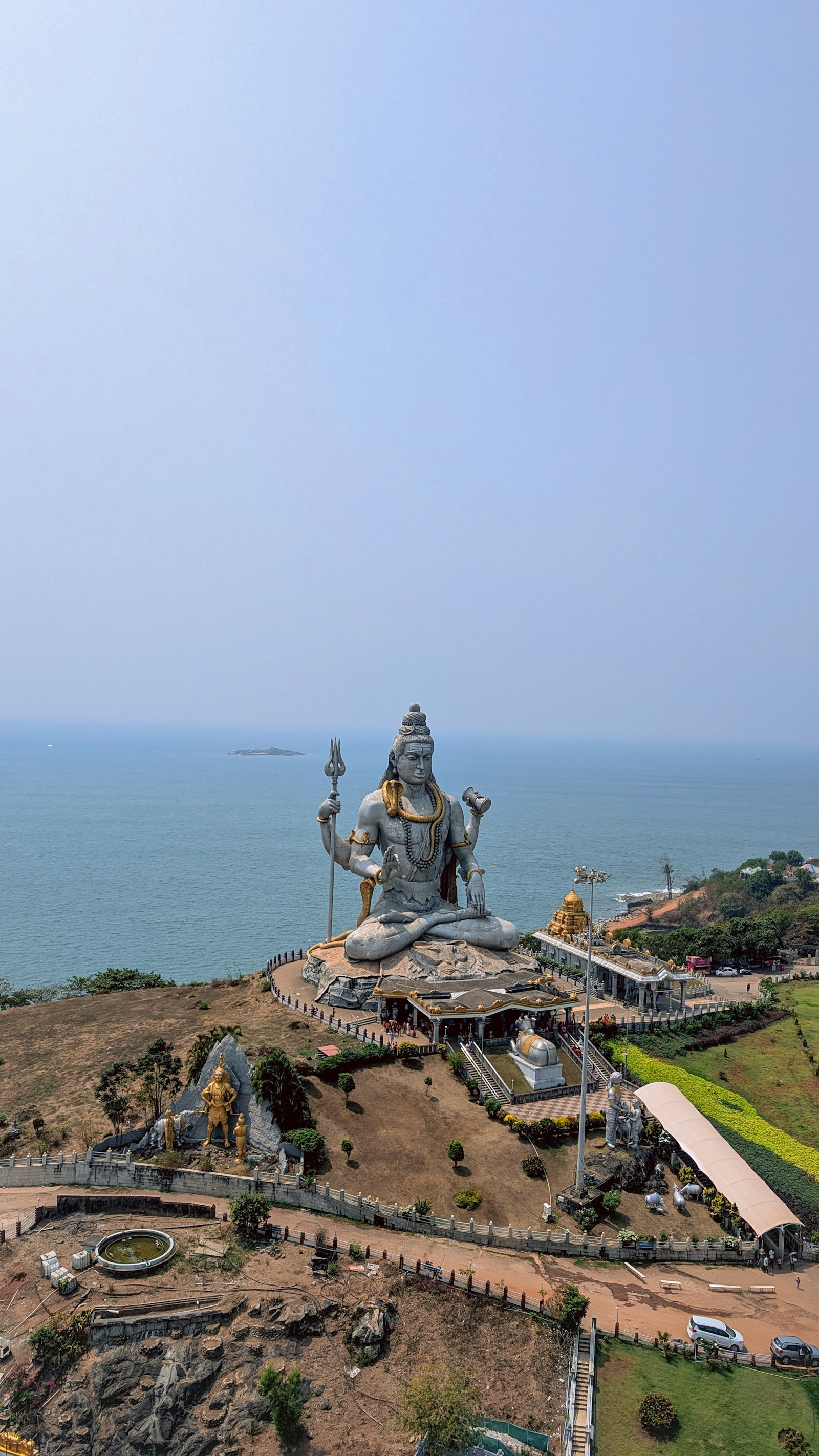
Somnath: The Temple That Refused to Die
On the western coast of Gujarat, where land meets the Arabian Sea, stands a temple that embodies perhaps the greatest story of resilience in human history.
Somnath Temple has been destroyed at least 17 times. And rebuilt 17 times.
Each time invaders reduced it to rubble, devotees raised it again. This isn't just a building—it's a 2,000-year lesson in the power of unwavering faith.
The First Jyotirlinga
The name "Somnath" means "Lord of the Moon":
According to the Shiva Purana, Chandra (the Moon) was cursed by his father-in-law Daksha to wane eternally. After intense penance to Shiva at this spot, the curse was modified—the moon would wax and wane but never disappear completely.
In gratitude, Chandra built a temple of gold. Later temples were built in silver by Ravana, in wood by Krishna, and in stone by Bhimadeva.
The Destruction Timeline
The Major Invasions:
1026 CE - Mahmud of Ghazni
The most infamous attack. Mahmud's forces:
1297 CE - Alauddin Khalji's general Nusrat Khan
Rebuilt temple destroyed again.
1395 CE - Muzaffar Shah I (Gujarat Sultanate)
Another destruction, this time by a local sultanate.
1451 CE - Mahmud Begada
Rebuilt temple demolished once more.
1701 CE - Aurangzeb
The Mughal emperor ordered its destruction despite Somnath being far from his power center.
The 1947 Reconstruction
"The Somnath Temple signifies that the power of creation is always greater than the power of destruction."
— Sardar Vallabhbhai Patel, 1947
The story of the modern temple is itself remarkable:
November 13, 1947: Just two months after Independence, Deputy Prime Minister Sardar Patel visited the ruins. Standing amid the rubble, he declared: "The Somnath Temple will be rebuilt."
This was controversial:
Patel's solution: The temple would be rebuilt by a public trust, not the government. But he personally laid the foundation stone.
May 11, 1951: President Rajendra Prasad installed the new Jyotirlinga—despite Nehru's opposition to a president attending a religious ceremony.
The temple was designed by Prabhaschandra Mistry in the Chalukya style of temple architecture.
Why This Location?
The geography of Somnath is significant:
The Arrow of Rama
A pillar in the temple compound claims that from this point, there is no land between you and Antarctica. The inscription reads:
"This is the point at which the first beam of the sun crosses to the southernmost tip of the earth."
While not literally accurate, it captures an ancient understanding of geography—the temple sits at India's westernmost pilgrimage point.
Triveni Sangam
Three rivers meet here:
River confluences are sacred in Hinduism, making this a natural pilgrimage site.
Ocean Energy
The temple faces the Arabian Sea. The prana pratishthan (energy installation) is said to be amplified by:
Architectural Marvels
The current temple showcases several remarkable features:
The Shikara (Spire)
The Arrow of Shiva
A memorial column with Sanskrit inscription:
"From this point, there is only sea until Antarctica. There is no land in between."
This represents ancient Indian maritime knowledge.
The Sound Architecture
The temple is designed so that:
The Lingam Mystery
Multiple theories about the original lingam:
What Mahmud Actually Found
Historical records from Al-Biruni and other chroniclers suggest:
The wealth was so legendary that "Somnath's riches" became a proverb across the medieval Islamic world.
Visiting Somnath Today
What to Experience
Best Mantra to Chant
The Shiva Panchakshari Mantra:
ॐ नमः शिवाय
Om Namah Shivaya—"I bow to Shiva"
This simple yet powerful mantra is chanted by millions at Somnath.
Practical Information
The Deeper Teaching
🎯 Key Takeaways
- Somnath is the first of 12 Jyotirlingas—self-manifested forms of Shiva
- The temple was destroyed 17+ times over 1,000 years
- Each destruction was followed by reconstruction by devotees
- Sardar Patel championed the 1947 rebuilding as independent India's first major temple project
- The location marks India's westernmost pilgrimage point at a sacred river confluence
- The temple's survival represents the Hindu philosophy that creation always triumphs over destruction
Somnath teaches that:
Faith is not passive. It required thousands of people to rebuild, again and again.
Memory persists. Even when the structure was gone, people remembered what stood there.
Creation outlasts destruction. Mahmud is a footnote. Somnath still stands.
Experience the Mantras of Somnath
The same Sanskrit mantras chanted at Somnath for over 2,000 years are still alive today. Learn to pronounce them correctly with Vedic Voice's AI-powered pronunciation guide—connecting your practice to an unbroken chain of devotion.